

Someone shopping for flower often runs into the same question: should the goal be indica, sativa, or a hybrid? The labels are everywhere, yet the effects of cannabis can feel surprisingly different from one product to the next. That gap between reputation and real-world experience is where confusion starts. A clear breakdown of plant traits, chemical makeup, and typical effects can make it easier to choose cannabis strains with more confidence, whether the goal is relaxation, focus, or symptom support.
What Indica, Sativa, and Hybrid Mean
Indica, sativa, and hybrid are simple labels used to group cannabis strains by plant type and common reputation. Cannabis indica usually refers to shorter, bushier plants with a relaxing image attached to them. Cannabis sativa tends to describe taller plants with a more energizing reputation. Hybrid strains are crosses that mix traits from both lineages. These terms stuck because they give shoppers a fast shorthand, especially in dispensaries and online menus. The problem is that strain names and category labels do not reliably predict the effects of cannabis on their own. Two products with the same name can feel different because growers, harvest methods, and cannabinoid levels vary. That is why the labels are useful as a starting point, but not as a guarantee of how a product will feel once used.
How Cannabis Plants Differ in Appearance
Plant shape is one of the easiest ways to tell the categories apart. Indica strains are often shorter, wider, and more compact, with broad leaves and dense flowering structure. Sativa strains usually grow taller, with thinner leaves and a looser, airier frame. Hybrid strains can land anywhere in between, depending on their genetics. These differences reflect how the cannabis plant adapted to different environments, not a promise about the user experience. A compact plant may suit indoor grows or limited spaces, while a taller one can need more room and training. That is why appearance matters to cultivators, but it should not be treated as a shortcut for judging potency, psychoactive effects, or the likely body high versus head high someone may feel.
Why the Effects of Cannabis Vary So Much
The label on the package matters less than the chemical makeup inside the flower. Two different strains can both be called indica and still produce very different effects of cannabis because their THC and CBD content, plus their terpene profile, are not the same. The body responds through the endocannabinoid system, a network that helps regulate mood, sleep, appetite, and discomfort. When cannabinoids interact with that system, the results can feel calming, stimulating, heavy, clear, or simply not as expected. That is why some people find one product helpful for nighttime use while another feels better for daytime productivity. The same category name can hide major differences in potency, aroma, and the way the experience unfolds. Looking beyond the label gives a better read on potential effects than relying on strain name alone.
THC, CBD, and Terpenes: The Real Difference Makers
Tetrahydrocannabinol (THC) is the main compound linked to the high, and higher THC products often bring stronger psychoactive effects and a greater chance of feeling overwhelmed. Cannabidiol (CBD) is non-intoxicating and is often discussed as a balancing influence, especially in products with a more moderate THC-to-CBD ratio. The real experience comes from how these compounds work together with terpenes and cannabinoids in the flower. Terpenes shape aroma, but they also appear to influence mood, sensation, and how sharp or relaxed a product feels. A citrus-forward strain may feel brighter to one person, while a heavy, earthy profile may seem more grounding to another. The final experience depends on ratios, terpene profiles, tolerance, and the delivery method, not just whether the label says indica or sativa.
Indica Strains: Relaxation, Body High, and Sedative Effects
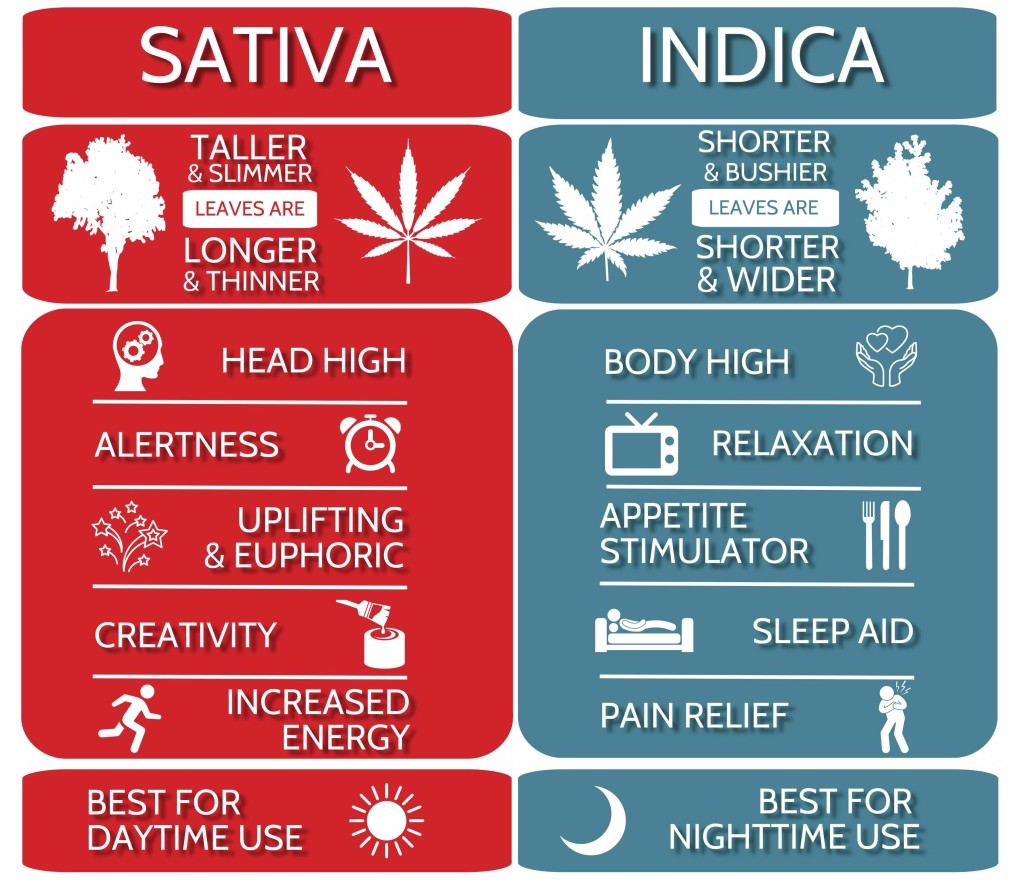
Indica strains have a long-standing reputation for calm, slower-paced effects that fit evening use. Many consumers describe them as bringing relaxation, a heavier feel, or a body high that settles into the muscles and limbs. That is why indica is often associated with winding down after work, watching a movie, or preparing for sleep. In some products, higher THC levels or certain terpene profiles may intensify sedative effects, which can be welcome for one person and too strong for another. Some users look to indica flower when they want to take the edge off stress or support rest, especially in products marketed for insomnia relief. Still, the response is personal, and not every indica strain feels sleepy. For some people, the result is simply calmer rather than couch-bound.
Sativa Strains: Energy, Focus, and a Head High
Sativa strains are commonly linked with a brighter, more alert experience. People often describe them as bringing a head high rather than a heavy body effect, meaning the feeling is more mental than physical. That can make sativa appealing for daytime use, social situations, brainstorming, or creative work. Some consumers also prefer it when they want focused effects without the deep slowdown associated with many indica strains. The trade-off is that higher THC can feel overstimulating, especially for newer users or anyone prone to anxiety. A product that sounds energizing on paper may still land too sharply if the THC level is high or if the person’s tolerance is low. So while sativa flower has a reputation for uplift, the actual effects of cannabis still depend on the full chemical profile and how the body reacts that day.
Hybrid Strains: Balanced or Dominant Effects
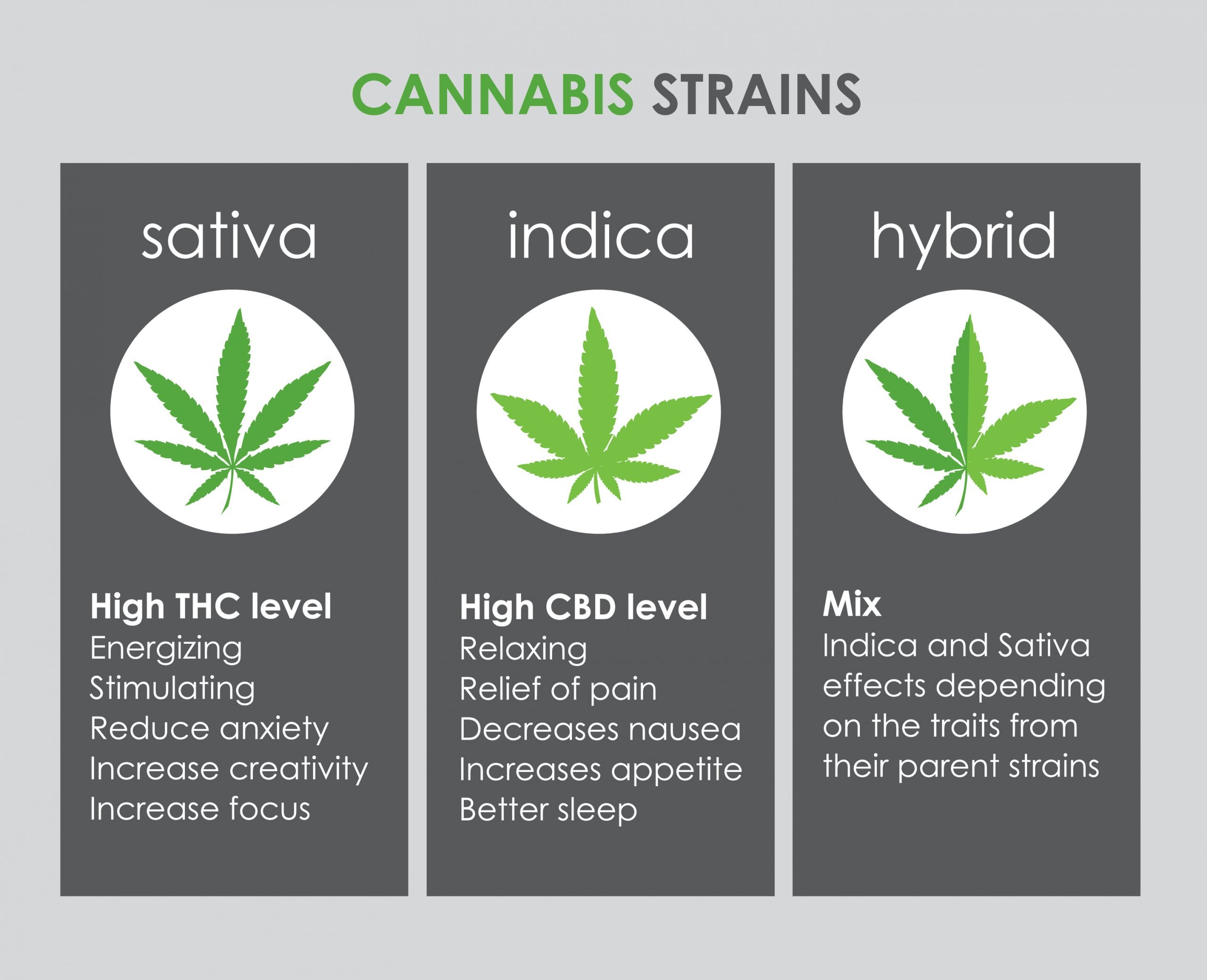
Hybrid cannabis blends indica and sativa genetics, which makes it the most flexible category for many shoppers. Some hybrid strains are indica-dominant and lean toward relaxation, while others are sativa-dominant and trend more energetic or creative. A balanced hybrid may sit somewhere in the middle, offering a gentler mix of body comfort and mental lift. That flexibility is useful for people who want pain relief without feeling overly sedated, or a calm mood without losing too much momentum. Still, the final experience comes from chemistry, not the category name alone. A hybrid with high THC and a sharp terpene profile may feel quite different from another hybrid with similar genetics but lower potency. For buyers comparing different strains, hybrid is best treated as a clue, not a prediction.
How Cannabis May Affect Certain Conditions
People often explore medical cannabis because they are looking for support with symptoms that have been hard to manage other ways. Common reasons include pain, sleep issues, appetite loss, nausea, anxiety, and inflammation. In those cases, the goal is usually not a cure, but potential relief that improves daily function or comfort. Research on certain conditions is mixed, and the evidence can vary by product type, dose, and individual response. Some people report that cannabis helps them rest more easily or tolerate discomfort better, while others notice little benefit or too many side effects. The type of strain can matter, but so can THC and CBD content, timing, and tolerance. For anyone considering cannabis use for wellness, the practical approach is to view it as one possible tool rather than a guaranteed solution.
Potential Side Effects and Safety Considerations
Even well-matched products can come with potential side effects. Dry mouth, dizziness, red eyes, and impaired focus are common, especially with stronger flower. THC-rich products can also increase anxiety, short-term memory issues, or a strong sedative effect that makes it hard to stay productive. Smoking, vaping, and edibles all create different timelines and intensities, which changes how the experience is felt. Edibles in particular can be tricky because they may take longer to kick in and can feel stronger once they do. That is why a low-and-slow approach matters, especially for first-time users or people trying high THC content for the first time. Starting with a modest dose and waiting long enough to gauge the effect can prevent an uncomfortable experience.
How to Choose the Right Cannabis Product
A useful choice starts with the goal, not the label. Someone looking for relaxation or sleep may lean toward indica or indica-dominant hybrid strains, while someone chasing energy or creative effects may look at sativa or sativa-dominant options. People comparing different strains should check THC and CBD content first, because those numbers often tell more than the strain name does. Terpene profiles can also help narrow the field: some buyers prefer earthy, calming aromas; others like brighter, more stimulating profiles. Product format matters too, since flower, vape, and edible experiences can differ a lot in onset and duration. First-time users usually do better with lower doses and clearer labeling, especially when choosing between medical cannabis and recreational use. A simple strategy is to pick one goal, read the lab details, and avoid assuming all products with the same name will feel the same.
| Goal | What to Look For | Why It Helps |
|---|---|---|
| Relaxation or sleep | Indica-dominant flower, lower anxiety potential, moderate THC | May support a slower, heavier experience |
| Energy or focus | Sativa-dominant flower, uplifting terpene profile, manageable THC | May feel brighter and more daytime-friendly |
| Balanced use | Hybrid strains with measured THC and CBD content | Can sit between calm and alert |
| New to cannabis | Low dose, clear lab results, simple flower product | Helps reduce surprise and overconsumption |
Do Stoners Prefer Indica or Sativa?
The short answer is that preferences depend on the situation. Many regular users choose indica when they want relaxation and sativa when they want social energy or a lighter mental lift. Others rely on hybrid strains because they want something more balanced or more predictable based on THC and CBD ratios. Once people have enough experience, the category often becomes less important than the specific chemical profile and how a strain performs in real life. So yes, some stoners prefer indica, and others prefer sativa, but there is no universal winner. The labels work as shorthand for shopping, not as a rule for how any one person should feel.
What to Know About Medical Cannabis and Legality
Cannabis laws in the United States vary widely by state, product type, and whether the product is intended for recreational use or medical cannabis. Flower may be available in one place and restricted in another, and hemp-derived products can follow a separate legal path. That makes it smart to check local regulations before buying, carrying, or using anything that contains cannabinoids. Even where cannabis is legal, rules can differ for possession, transport, and medical access. For anyone using cannabis for symptom support, legal status and product testing matter just as much as strain choice. A legitimate, labeled product is easier to compare, safer to use, and more likely to list accurate THC and CBD content. When in doubt, local dispensary staff or a licensed clinician can help clarify what is permitted.
Key Takeaways on Indica, Sativa, and Hybrids
Indica and sativa are useful starting points, but chemistry drives the actual experience. The biggest clues usually come from THC and CBD content, terpene profiles, and product format, not the name alone. Indica strains often lean relaxing, sativa strains often lean uplifting, and hybrids can do either or both. For better choices, match the product to the goal, start cautiously, and pay attention to how different strains feel in practice.

